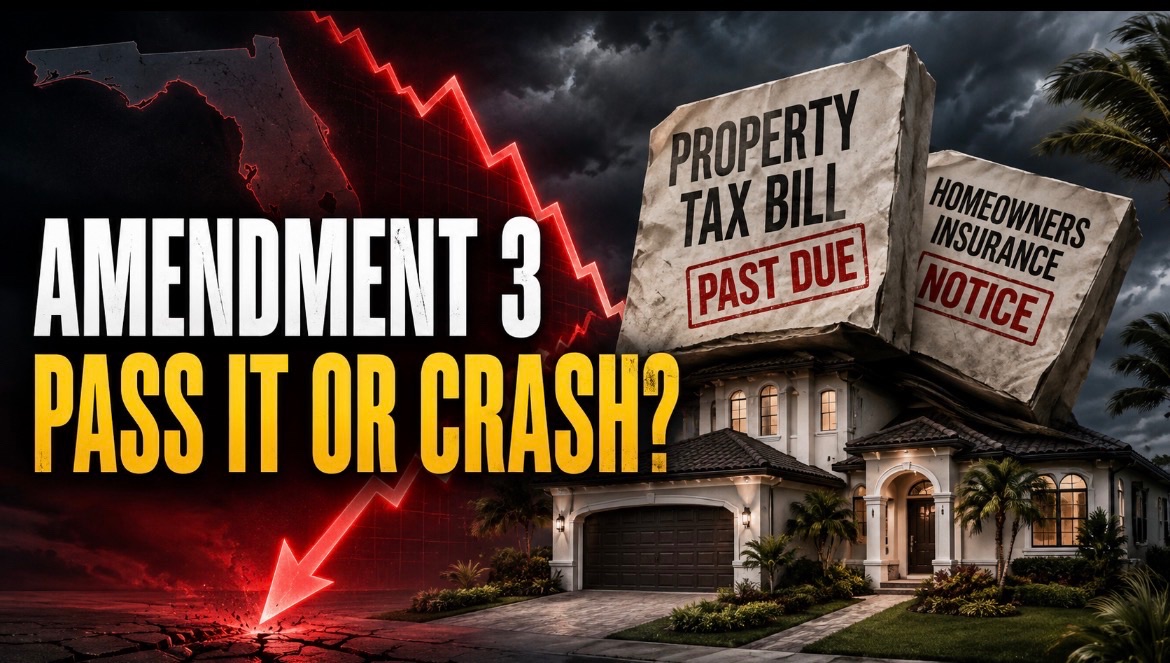
The Real Doomsday Scenario: What Happens If Amendment 3 Does NOT Pass?
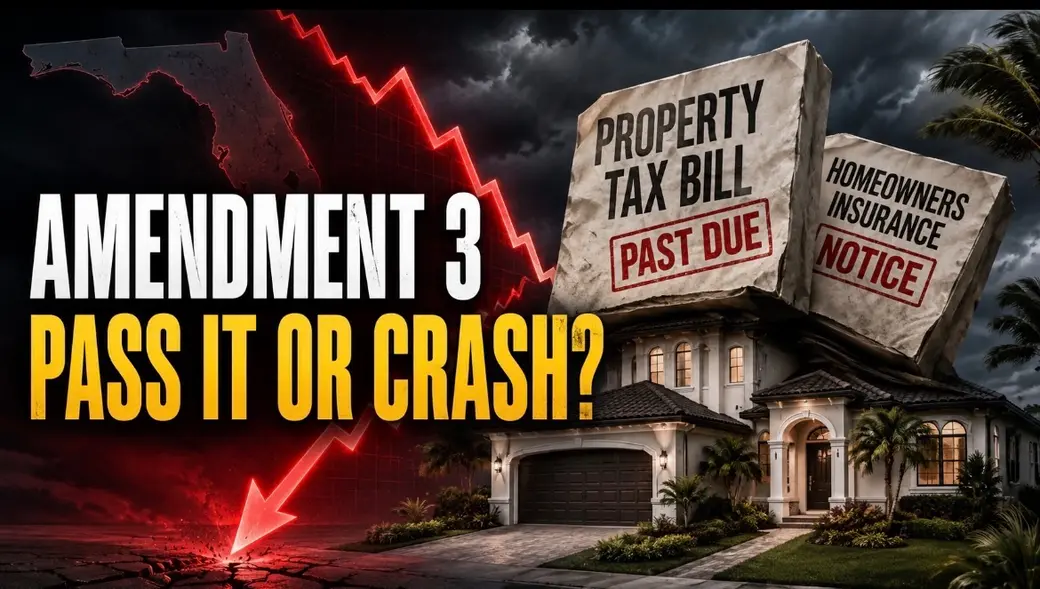
The Real Doomsday Scenario: What Happens If Amendment 3 Does NOT Pass?
For months, local government officials across Florida have warned voters about what could happen if Amendment 3 passes. They talk about budget shortfalls, reduced services and financial hardship for cities and counties. But after 35 years in the real estate business, I believe they may be warning Floridians about the wrong doomsday scenario.
The greater danger may be what happens if Amendment 3 does not pass.
Florida’s housing market is already showing cracks. Home prices remain high, mortgage rates have added hundreds of dollars to monthly payments, insurance premiums have exploded and property taxes have climbed with assessed values. In some cases, taxes and insurance now rival or even exceed the principal and interest portion of a homeowner’s payment.
That is not sustainable.
Florida's First Time Homebuyers Are Disappearing
When I entered real estate in 1991, the median first time homebuyer was 28 years old. According to the National Association of Realtors, that median age reached a record 40 in its 2025 Profile of Home Buyers and Sellers. First time buyers represented only 21% of purchasers, also a record low.
That is not just a statistic. It is a crack running through the foundation of the American dream.
Young adults are losing a decade or more of potential homeownership, equity growth and wealth creation. Many are not delaying a purchase because they do not want a home. They are delaying because the monthly payment no longer works.
When an entire generation cannot afford to enter the market, the consequences eventually reach everyone. Fewer first time buyers means fewer homeowners able to sell and move up. Fewer move up buyers means less demand throughout the market. Inventory builds, homes sit longer, sellers reduce prices and falling values can begin feeding on themselves.
What Amendment 3 Would Do
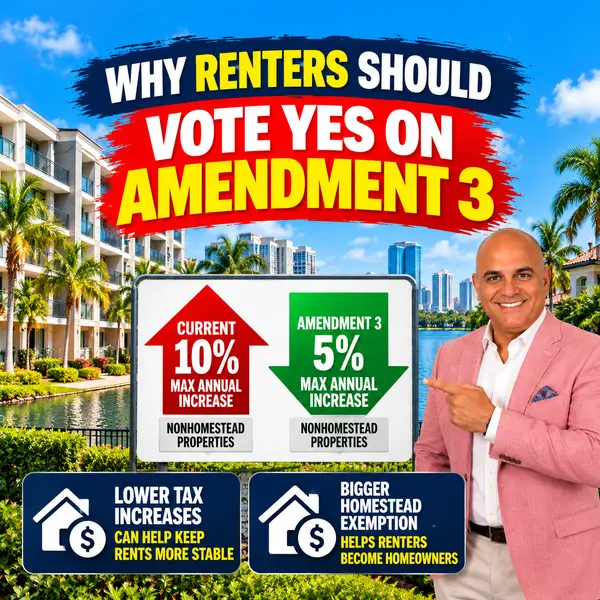
Amendment 3 would increase Florida’s homestead exemption for non school property taxes to $150,000 in 2027 and $250,000 in 2028. School district property taxes would remain in place. The proposal would also reduce the annual assessment cap on non homestead property from 10% to 5%.
Opponents point to an official estimate of roughly $12 billion in recurring statewide local property tax revenue reductions. That number deserves to be taken seriously. The percentage impact would not be identical everywhere, and some counties and cities would face a larger adjustment than others.
But local government leaders also need to consider the cost of doing nothing.
Depending on the jurisdiction and the assumptions used, officials may be looking at a budget adjustment in the neighborhood of 10% of the property tax levy. That is real money, but it is a manageable problem compared with the damage that a major housing correction could create.
Florida local governments have benefited enormously from years of rising property values, new construction and properties being reassessed after a sale. In many communities, property tax collections have grown dramatically since 2019. Yet homeowners are being told that even a partial rollback would be catastrophic.
My question is simple: What happens to those budgets if refusing modest relief helps push the housing market over the edge?
A Healthy Housing Market Generates Tax Revenue
Florida’s Save Our Homes system limits annual assessment increases on established homestead property. When ownership changes, however, the property is generally reassessed at just value the following January. That means a healthier real estate market can generate new tax revenue. When homes begin selling again, long held properties with protected assessed values can be reset closer to current market value.
More transactions also support moving companies, contractors, inspectors, title companies, lenders, home improvement businesses and countless local jobs. Amendment 3 is not only about leaving money in a homeowner’s pocket. It could also help loosen a market that has become increasingly frozen by the total monthly cost of ownership.
Will increased sales immediately replace every dollar of the projected revenue reduction? Nobody can responsibly guarantee that. But it is equally irresponsible to calculate the cost of tax relief as though buyer behavior, transaction volume, construction and reassessment revenue will never change.
Budgets do not exist in a vacuum. Neither does the housing market.
Florida Has Seen What a Housing Collapse Looks Like
People who lived through the 2006 through 2011 housing collapse remember how quickly confidence disappeared. In some Tampa Bay neighborhoods, property values fell by 40% or 50%. Foreclosures multiplied, sales stalled and local tax rolls were forced to reflect lower market values.
That is the part of today’s debate many local officials appear unwilling to confront.
If government cannot adjust to a roughly 10% revenue change, how will it adjust if a severe market correction cuts taxable values far more deeply?
Officials warning that Amendment 3 could force difficult budget decisions should also explain their plan for a housing downturn. If homes that were valued at $500,000 fall to $350,000 or $250,000, local governments do not get to continue taxing them as though the collapse never happened. Falling assessments can create the very budget crisis officials claim they are trying to avoid, only on a much larger scale.
In other words, the choice may not be between keeping 100% of today’s revenue and accepting a modest reduction. The real choice may be between making a controlled adjustment now and being forced into a far more painful adjustment later.
Amendment 3 Alone Cannot Control Florida Home Values
I am not claiming that one ballot measure alone controls Florida home values. Interest rates, insurance, inventory, employment, migration, construction costs and the broader economy all matter. Nor can anyone honestly promise that Amendment 3 will prevent a downturn.
But after watching Tampa Bay real estate for 35 years, I believe the warning signs are too serious to ignore. Affordability is deteriorating. First time buyers are disappearing. Transactions are slowing. The cost of carrying a home is pushing more families to their limit.
Government cannot continue treating homeowners as an unlimited source of revenue and assume there will never be a breaking point.
Local officials are asking voters to fear the budget impact of Amendment 3. I believe they should fear the alternative even more: a market in which buyers stop buying, sellers chase the market downward, values fall, reassessments move in reverse and the tax base contracts far beyond the relief government refused to provide.
That Is the True Doomsday Scenario
Amendment 3 asks local government to adapt before the market forces a much harsher adaptation upon everyone. A planned reduction can be budgeted. Waste can be cut. Priorities can be reevaluated. Growth and reassessments can rebuild revenue.
A housing collapse is not controlled, orderly or modest.
Florida can accept a manageable adjustment today, or it can gamble that homeowners will continue absorbing higher taxes, higher insurance and higher monthly payments forever.
I would not make that bet.
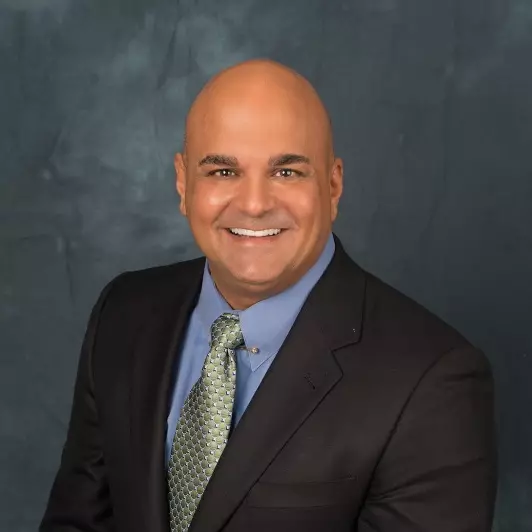
Vincent Arcuri has worked in Tampa Bay real estate since 1991. This article represents his professional opinion and market analysis.
Categories
Recent Posts