Florida Homeowners Need Shoes, but Government Bought a Ferrari
As a real estate agent, I see people struggling with the cost of homeownership every day. When I began selling real estate in Tampa in 1991, the average home sold for approximately $89,000, and Florida’s homestead exemption was $25,000. That exemption represented a meaningful portion of the value of a typical home. Florida voters approved Save Our Homes in 1992, and it took effect in 1995. It limited annual increases in the assessed value of a homesteaded property to 3 percent or the rate of inflation, whichever is lower. Then, in January 2008, voters approved Amendment 1, which increased the maximum homestead exemption from $25,000 to $50,000 for non school property taxes and created portability for accumulated Save Our Homes benefits.
That was nearly 20 years ago.
Since then, home prices, property taxes, homeowners insurance and nearly every other expense associated with owning a home have skyrocketed. The basic homestead exemption has remained at $50,000. Save Our Homes protects an existing homeowner from dramatic annual increases in assessed value. However, when a property is sold, the accumulated protection generally disappears and the home is reassessed based on its current market value.
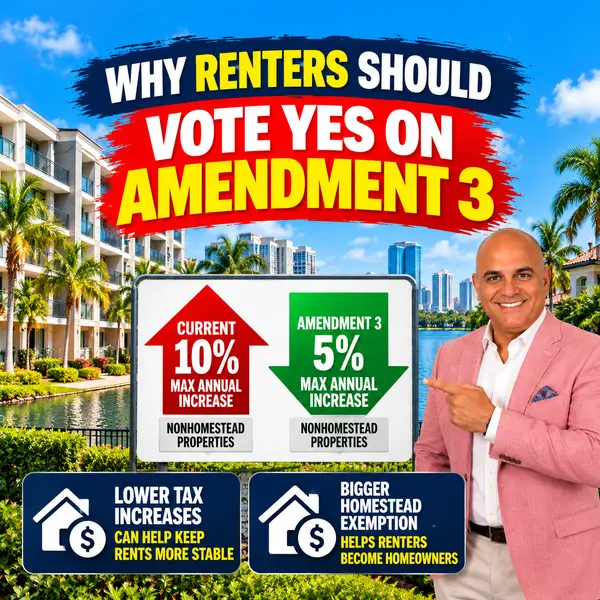
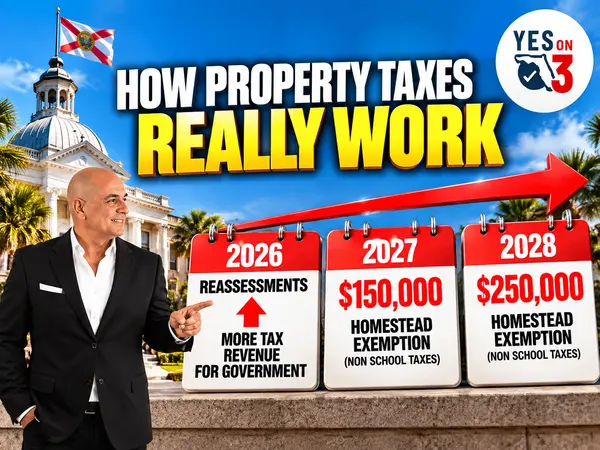
In other words, the shield comes down. That reassessment can produce a major increase in the tax bill for the new owner. This is why buyers should never assume that the seller’s current property tax bill is what they will pay after purchasing the home. Property taxes are collected by local taxing authorities, including counties, municipalities, school districts and special districts. Florida does not collect a state property tax. Amendment 3 would increase Florida’s homestead exemption for non school property taxes from $50,000 to $150,000 in 2027 and then to $250,000 in 2028. Beginning in 2029, the exemption would be adjusted for inflation. School district property taxes would not be affected.
The proposal will appear on the November 3, 2026 ballot and requires approval from at least 60 percent of voters.
WE HAVE HEARD THESE WARNINGS BEFORE
Whenever property tax relief is proposed, we hear the same warnings. There will not be enough money for police, firefighters, EMS, libraries, parks or other essential services. I remember hearing similar arguments during the property tax debate in 2007 and 2008. Nearly two decades later, we are hearing them again. Local officials are entitled to explain how Amendment 3 would affect their budgets. Voters should listen to those concerns and examine the numbers carefully. Taxpayers are also entitled to ask what local governments have done with the tremendous revenue growth they have already received. If government revenue has dramatically increased, are our roads dramatically better? Are teachers being paid dramatically more? Are taxpayers receiving services that reflect all the additional money collected? Those are fair questions.
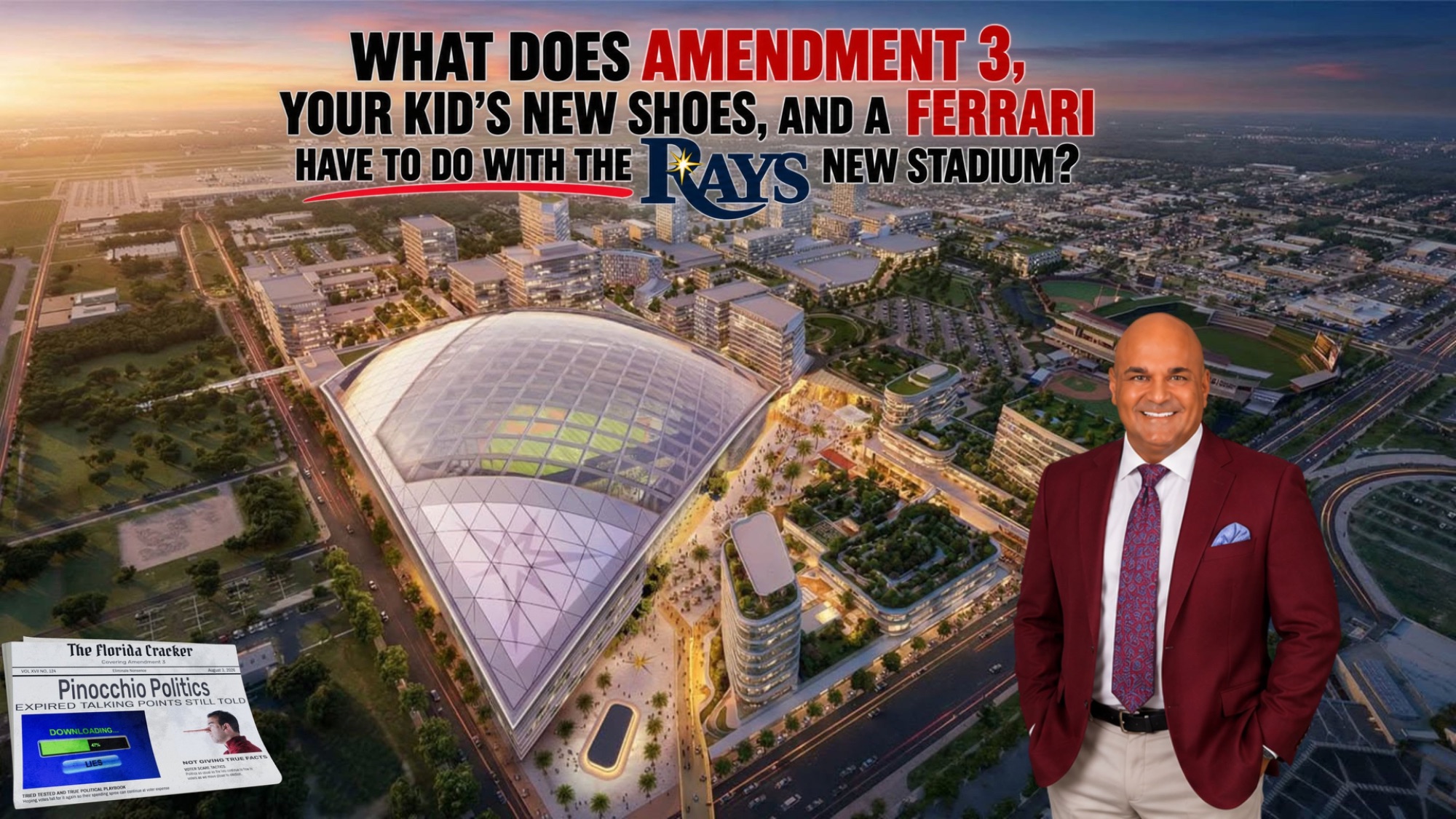
THE RAYS STADIUM AND THE GOVERNMENT’S FERRARI
The City of Tampa recently approved an $80 million contribution toward the new Tampa Bay Rays stadium and surrounding development. Hillsborough County approved a much larger public contribution as part of the approximately $2.3 billion project. Supporters describe the stadium district as an investment. They argue that the development will generate economic activity and future tax revenue. Maybe it will. But imagine a child in a struggling family asking his father for a new pair of shoes. The father says, “I’m sorry. We cannot afford them. Money is tight.” Three days later, the father pulls into the driveway in a brand new Ferrari. The child asks, “I thought we did not have enough money for my shoes?” The father replies, “The Ferrari is different. It is an investment. My business will grow, and the Ferrari will eventually pay for itself.”
The child is still standing there in worn out shoes.
That is how many Florida homeowners feel. When homeowners ask for meaningful property tax relief, they are told government cannot afford it. But when government wants to commit public money to a stadium and entertainment district, future economic growth suddenly becomes part of the justification. You cannot use future economic growth to justify the Ferrari while pretending future economic growth does not exist when homeowners ask for the shoes. This is not simply an accounting debate. It is a debate about priorities.
THE AMERICAN DREAM IS SLIPPING AWAY
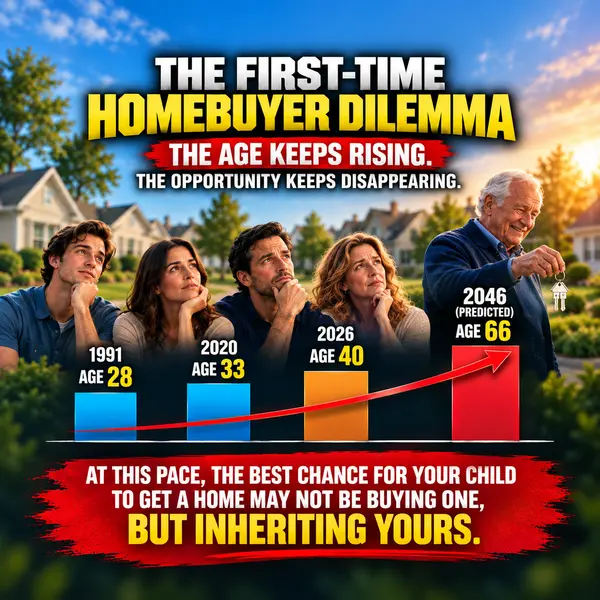
In 2025, the median age of a first time homebuyer reached a record 40 years old. Historically, first time buyers were generally in their late twenties or early thirties. That delay has serious consequences. A family purchasing its first home at 28 has more time to build equity than a family that cannot purchase until 40. Those additional years of ownership can help fund retirement, provide security during an emergency and create generational wealth for children and grandchildren. For many Americans, a paid off home becomes one of their most important retirement assets. They can sell it, downsize and use the remaining equity to supplement their retirement income. When homeownership is delayed by a decade or disappears entirely, much of that opportunity disappears with it.
What happens when an entire generation reaches retirement without home equity? What happens when working families can no longer afford the taxes, insurance and other expenses required to own a home? What happens to the American dream when owning a home becomes something primarily available to wealthy households and large investors?
This is not a sustainable path. Whenever I speak about Amendment 3, someone inevitably says, “Of course he supports it. He is a real estate agent.” Yes, I am. For more than 35 years, my job and my passion have been helping people buy homes, sell homes, downsize, relocate and build better lives through real estate. I have helped first time buyers receive the keys to their first home. I have helped growing families find more space. I have helped retirees sell the home where they raised their children and restructure their lives for retirement. If I were a doctor and a new treatment could help my patients, no reasonable person would criticize me for discussing it simply because medicine was my profession. Homeownership is my profession, and I have watched it become increasingly unaffordable. That is precisely why I am speaking up. Amendment 3 will not solve every affordability problem. It will not reduce homeowners insurance premiums, lower mortgage rates or create more housing inventory. It would provide property tax relief to eligible homesteaded homeowners while reducing future revenue available to local governments. Voters should understand both sides of that equation.
They should also pay close attention to the elected officials discussing it.
Which officials are willing to examine spending and demand efficiency? Which officials immediately reach for police officers, firefighters and libraries whenever taxpayers request relief? Which officials can find money for major development projects but insist that homeowners must continue carrying the same burden? Florida families are suffering under the combined weight of housing prices, property taxes, insurance premiums and everyday inflation.The American dream of homeownership is slipping away from our children and grandchildren.
Apparently, government can afford the Ferrari.
I believe Florida homeowners deserve the shoes.
Vincent Arcuri
Real Estate Agent Since 1991
Categories
Recent Posts