TAMPA BAY HOMEOWNERS ARE PAYING MORE THAN EVER. SO WHY ARE THE ROADS STILL FALLING APART?
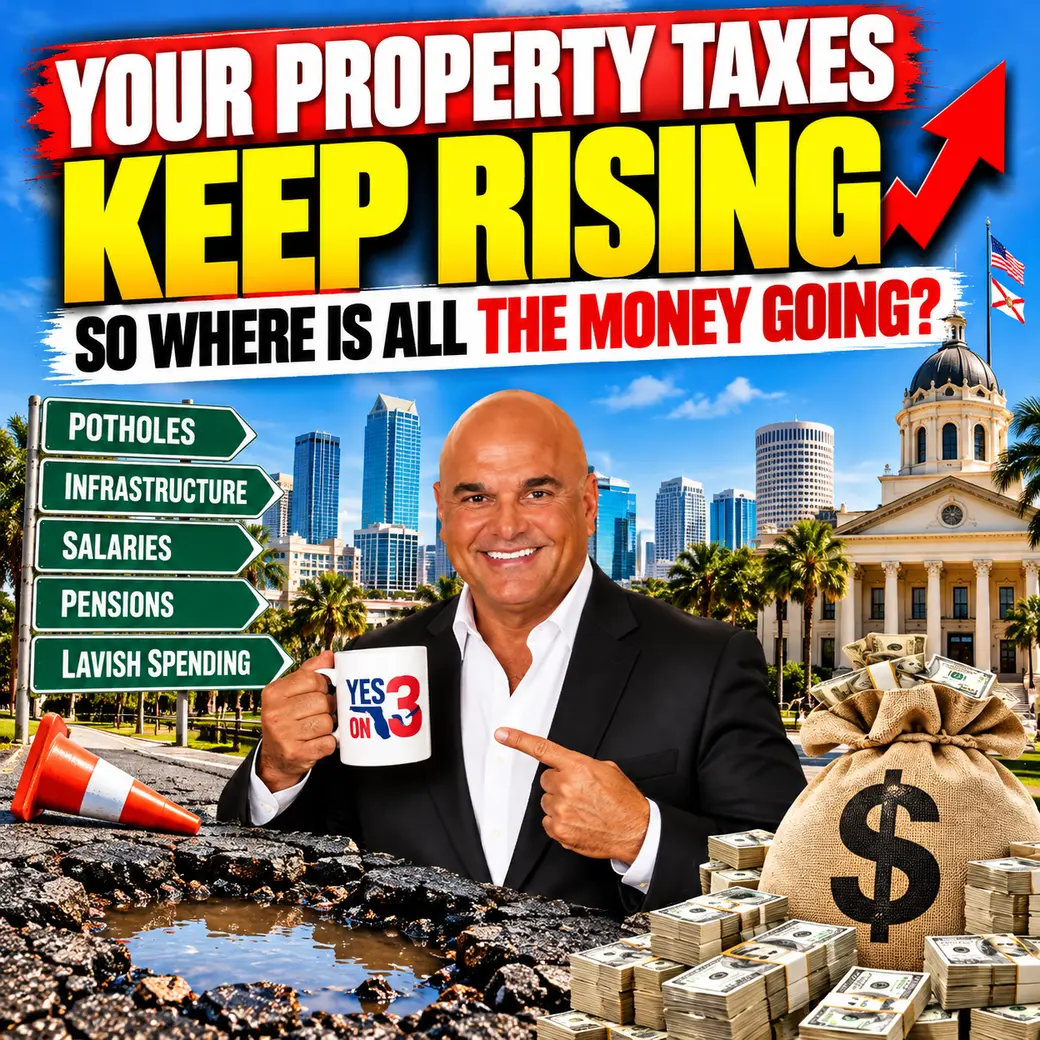
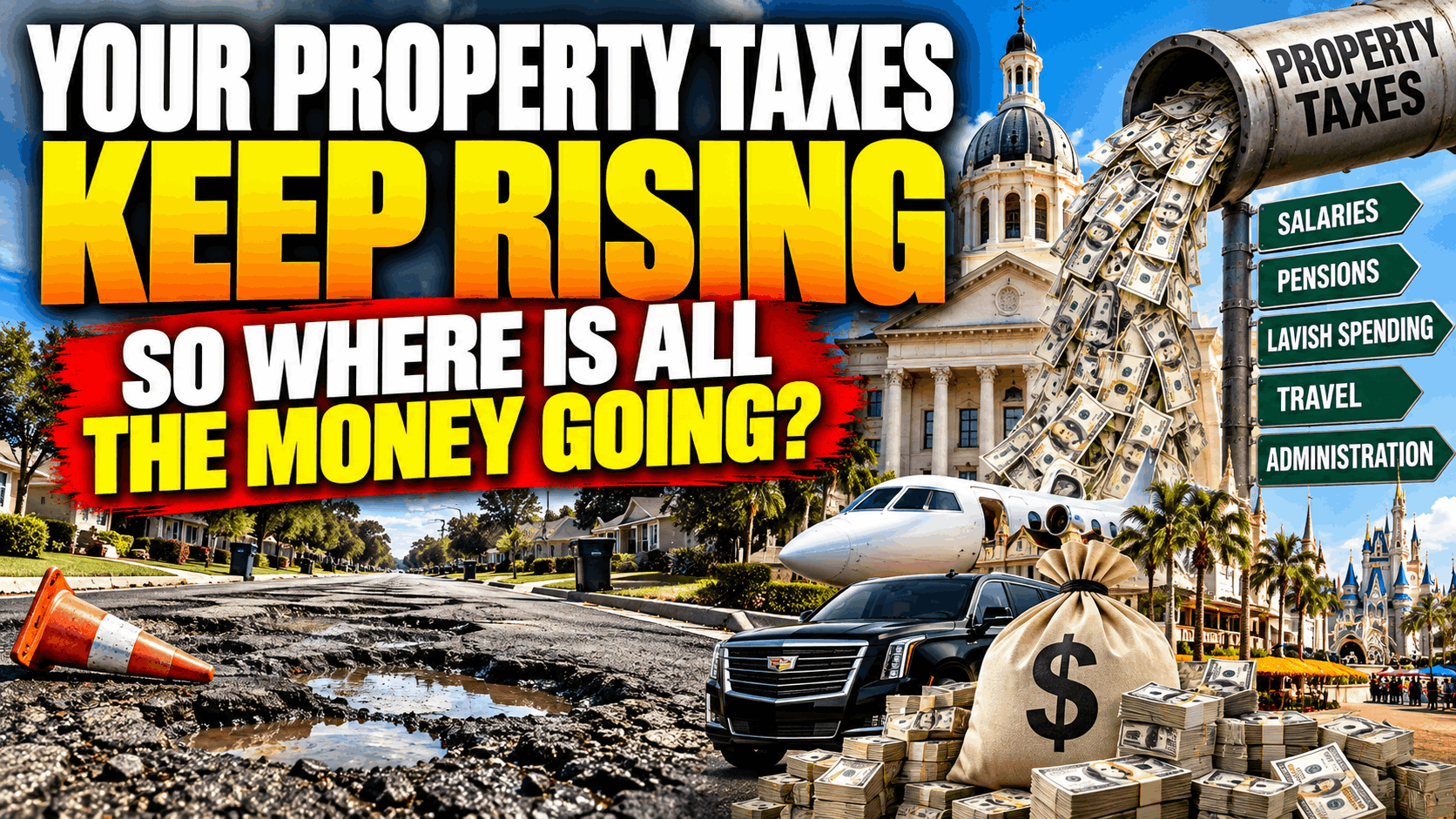 YOUR PROPERTY TAXES KEEP RISING. SO WHERE IS ALL THE MONEY GOING?How Government Spending and Neglected Infrastructure Are Becoming a Real Estate Problem in Tampa Bay
I've been selling Florida real estate since 1991, and when we talk about housing affordability today, everybody talks about mortgage rates, homeowners insurance and the price of the house. But there's another expense becoming an increasingly important part of the affordability conversation: PROPERTY TAXES. Property taxes aren't just another bill homeowners pay. That money helps fund the government and public services surrounding your property. Roads, public safety, parks, drainage and other public infrastructure all contribute to the quality of life in a community. They can also affect how desirable an area is to future buyers. So here's the question I think taxpayers have every right to ask: IF PROPERTY TAX REVENUE KEEPS INCREASING, WHY DO WE KEEP HEARING THAT GOVERNMENT DOESN'T HAVE ENOUGH MONEY?
PROPERTY VALUES WENT UP. SO DID THE TAX BASE.
Florida's tremendous growth and rising real estate values have created enormous increases in taxable property values in many communities. Look at Hillsborough County as an example. According to Florida Department of Revenue county property tax data, county ad valorem taxes levied increased from approximately $714 million in 2020 to approximately $1.086 billion in 2025. That's an increase of approximately 52% in only five years. That's hundreds of millions of additional dollars being levied annually compared with 2020. To be clear, that doesn't mean government expenses haven't increased. Tampa Bay has grown. Inflation has increased the cost of labor, equipment, construction and public services. More residents can require more infrastructure. But that's precisely why taxpayers should be looking at both sides of the ledger. Don't just tell me how much more government costs. Show me how much more government is collecting.
DRIVE AROUND TAMPA BAY AND LOOK AT THE INFRASTRUCTURE
Here's where this becomes a real estate issue. Drive through communities throughout Tampa Bay and look at the roads. Look at the potholes. Look at aging infrastructure. Look at drainage problems and areas struggling to keep up with growth. Then look at your property tax bill. Homeowners naturally start asking a very simple question: WHAT AM I GETTING FOR ALL THIS ADDITIONAL MONEY? That's not an anti-government question. It's an accountability question. We need police officers. We need firefighters. We need emergency medical services. We need roads, drainage, infrastructure and essential government services. Those things cost money. But taxpayers also deserve to know that their money is being prioritized appropriately before they're told government simply needs more of it.
IMAGINE RUNNING YOUR HOUSEHOLD THIS WAY
Imagine making $500,000 a year and giving your children responsibility for managing the household finances. Every year, you give them more money. But instead of maintaining the house, they're spending freely. Vacations. Expensive cars. Jewelry. Clothes. Entertainment. Long term financial commitments. Meanwhile, the roof starts leaking, the driveway is falling apart, the plumbing needs repairs and the air conditioner is barely hanging on. Finally, you ask why the house is falling apart after you've given them more money every single year. Their answer? WE NEED MORE MONEY. Wouldn't your first question be: WHERE DID ALL THE MONEY I ALREADY GAVE YOU GO? That's the conversation I believe taxpayers should be having with government.
GOVERNMENT COMPENSATION AND RETIREMENT COSTS MATTER TOO
Government isn't only paying for roads and public safety. Taxpayer dollars also support salaries, benefits, pensions, retirement obligations, administration, capital projects and countless other expenditures. Florida's public retirement system also includes the Deferred Retirement Option Program, commonly known as DROP. DROP allows eligible Florida Retirement System participants to effectively retire for pension purposes while continuing employment for a specified period, with retirement benefits accumulating during participation. There are legitimate reasons governments offer competitive compensation and retirement benefits. If we expect talented people to work in government, police our communities, fight fires, teach children and provide public services, compensation matters. But taxpayers also have every right to examine the long term cost of those commitments. The question shouldn't be whether public employees deserve retirement benefits. The question should be whether the entire government spending structure is financially sustainable while still delivering the services taxpayers are paying for.
THIS IS BECOMING A HOUSING AFFORDABILITY PROBLEM
Here's the part I don't think receives nearly enough attention. When somebody buys a $500,000 or $600,000 house, the purchase price isn't the real cost of owning that home. There's the mortgage, property taxes, homeowners insurance, HOA or CDD fees in many communities, maintenance, utilities and interest. A buyer doesn't qualify for a house based solely on its purchase price. The monthly carrying cost matters. That's why rapidly increasing property taxes and insurance costs can eventually affect real estate values. YOU CAN ONLY INCREASE THE COST OF OWNING A HOME SO MUCH BEFORE BUYERS START SAYING NO. And Florida is already dealing with enormous affordability pressures.
GOVERNMENT IS PART OF THE REAL ESTATE EQUATION
For decades, Florida's affordability was one of its greatest advantages. People moved here because they could get more house, enjoy a great lifestyle and keep more of their income. But when the cost of owning that property keeps increasing, the equation changes. A house doesn't exist on an island. The government surrounding that house matters. The roads matter. The schools matter. Public safety matters. Infrastructure matters. And the property tax bill absolutely matters. When those taxes increase substantially while taxpayers perceive roads and infrastructure as deteriorating or failing to keep pace with growth, government should expect questions.
BEFORE ASKING FOR MORE, SHOW US WHERE THE MONEY WENT
Whenever property tax relief is discussed, one of the first questions we hear is: WHERE IS GOVERNMENT GOING TO GET THE MONEY? I think taxpayers are entitled to ask the opposite question: WHERE DID THE ADDITIONAL MONEY GOVERNMENT HAS ALREADY RECEIVED GO? Show us. Show taxpayers how much property tax revenue has increased. Show us how much population increased. Show us inflation. Show us salaries. Show us retirement costs. Show us administrative spending. Show us capital expenditures. Show us infrastructure spending. Show us what was spent on essential services and what was spent elsewhere. Then let taxpayers decide whether the problem is insufficient revenue or whether some spending priorities need to change. That's a much more productive conversation than immediately warning homeowners that police, fire, libraries or other popular services must be reduced whenever somebody proposes property tax relief.
HOMEOWNERS HAVE TO LIVE WITH A BUDGET
Here's what bothers me most. When homeowners insurance goes up, homeowners have to adjust. When groceries increase, families adjust. When mortgage rates rise, buyers adjust what they can afford. When businesses experience declining revenue, businesses adjust their spending. Nobody tells the homeowner, "Don't worry about it. Just go get more money from somebody else." Yet taxpayers often feel that's exactly how government approaches increasing expenses. Something eventually has to give. I'm not suggesting government doesn't need money. Of course it does. I'm suggesting taxpayers deserve transparency about how that money is being spent and what they're receiving in return. Because there should be a connection between what taxpayers pay and what government delivers.
THE REAL ESTATE INDUSTRY SHOULD BE TALKING ABOUT THIS
Realtors talk constantly about interest rates, inventory, insurance, affordability and home prices. We should also be talking about property taxes and government spending because they're increasingly part of the cost of homeownership. If we're serious about making housing affordable, we can't focus exclusively on the price of the house. We have to talk about the cost of keeping the house. And government controls a meaningful piece of that equation. After more than three decades selling Florida real estate, I've watched markets boom, crash and recover. I've watched interest rates rise and fall. I've watched insurance costs explode and property taxes become an increasingly important consideration for buyers. And one lesson remains the same: Eventually, the numbers have to work. They have to work for buyers. They have to work for sellers. They have to work for homeowners. And they should have to work for government too.
BEFORE ASKING TAXPAYERS FOR ANOTHER DOLLAR, SHOW US WHAT HAPPENED TO THE DOLLARS WE'VE ALREADY GIVEN YOU.
Vincent Arcuri
Florida Realtor Since 1991 | 813-VINCENT. That's 813-846-2368
Categories
Recent Posts