WHAT HAPPENS WHEN THE FIRST TIME HOMEBUYER TURNS 60?
WHAT HAPPENS WHEN THE FIRST TIME HOMEBUYER TURNS 60?

When I started selling real estate in 1991, the typical first time homebuyer was in their late 20s. Today, the median age of a first time homebuyer is 40 years old. Think about that for a minute. We have pushed the American Dream of homeownership back by roughly 12 years. That is 40% of the length of a 30 year mortgage, and I don't think we talk nearly enough about what those lost years could mean later in life. According to the National Association of Realtors, first time buyers now make up only 21% of the market, the lowest percentage ever recorded, and their median age has reached a record 40. That is not just a real estate statistic. That is a warning sign.
I THINK ABOUT ONE COUPLE I SOLD A HOME TO 30 YEARS AGO
Early in my real estate career, I sold a small home in West Tampa to a young newlywed couple. She was a schoolteacher, and he worked various jobs through the years. They weren't wealthy people. They didn't buy a mansion. They didn't flip houses or build some giant real estate portfolio. They simply bought a modest home, stayed there and eventually paid it off. That is the part of homeownership we sometimes forget. A home isn't only someplace to live today. For millions of ordinary Americans, it has historically been part of their retirement plan. If you buy your first home at 28 with a 30 year mortgage, that mortgage can be paid off at 58. Buy at 40 and you're looking at 70. That is a 12 year difference. At age 65, the person who bought at 28 could already have enjoyed seven years without a mortgage payment. The person who bought at 40 could still have five years of mortgage payments remaining. That matters.
HOMEOWNERSHIP BUILDS SOMETHING RENT DOESN'T
Imagine reaching retirement with Social Security, a pension or retirement savings AND a paid for home. Your largest monthly expense may be dramatically reduced. And if that couple had eventually moved into a larger home and accumulated more equity, they could potentially have sold it later, downsized and used some of that equity to supplement their retirement. That is why delaying homeownership isn't just a housing problem. It can become a retirement problem. The National Association of Realtors has estimated that delaying homeownership until 40 instead of 30 can mean losing roughly $150,000 in equity on a typical starter home. Now take this trend another 20 years. Are we going to accept a world where the typical first time buyer is 50, 55 or 60? Are Americans supposed to take out their first 30 year mortgage at 60 and make their last payment at 90? Of course not. That is preposterous. Something has to change.
HOUSING AFFORDABILITY IS A FOUR LEGGED STOOL
There isn't one magic solution to housing affordability. I look at it as a four legged stool. The economy and home prices are one leg. Interest rates are another. Homeowners insurance is another. Property taxes are another. We need an economy where incomes can better keep pace with the cost of owning a home. We need mortgage rates that make monthly payments more manageable. Florida needs continued insurance reform. And we need property tax reform. All four matter. But here is my point. On November 3, only one of those four is actually sitting on your ballot. Property tax reform.
THAT IS WHY I AM VOTING YES ON AMENDMENT 3
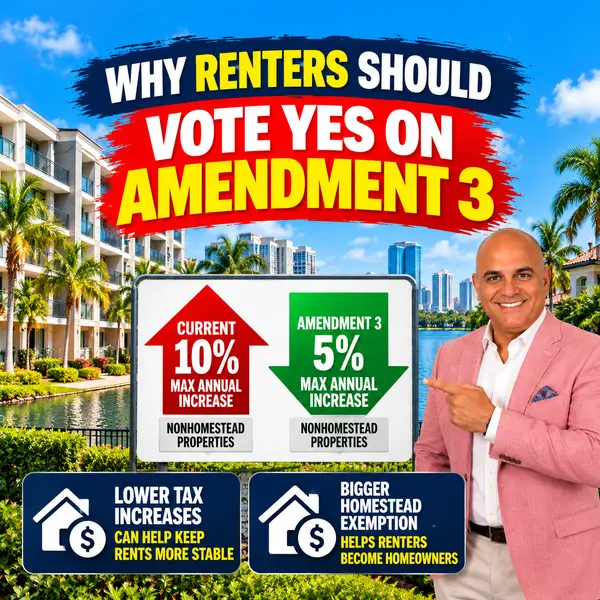
Amendment 3 isn't going to fix housing affordability by itself. I have never claimed it would. But if we are serious when we say housing has become too expensive, then when voters are actually given an opportunity to reduce one component of the cost of owning a primary residence, I believe we should take it. If approved by at least 60% of Florida voters, Amendment 3 would increase the homestead exemption for non school property taxes to as much as $150,000 in 2027 and $250,000 in 2028. School property taxes would not receive the expanded exemption. And let's be clear about something else. Save Our Homes remains in place.
Will Amendment 3 solve everything? No. Neither will lower interest rates alone. Neither will insurance reform alone. Neither will improving the economy alone. That is why there are four legs on the stool.
And this is the part I wish more people would understand. If you agree that housing affordability is a crisis, it makes absolutely no sense to vote against improving one of the four things making housing unaffordable simply because it doesn't solve the other three. We don't have to fix everything at once to start fixing something.
WE ARE LOSING SOMETHING BIGGER THAN A HOUSE
This isn't just about a tax bill. It is about whether a teacher, firefighter, police officer, restaurant worker, mechanic or young couple starting a family can still buy a modest home, build equity over 30 years and eventually enter retirement without a mortgage hanging over their heads. I have watched that happen for people throughout my 35 years in real estate. I don't want that opportunity to become something we tell our grandchildren used to be possible.
When I entered this business, first time buyers were typically in their late 20s. Today they are 40. We have already lost roughly 12 years.
Let's not lose another 12.
On November 3, I am voting YES on Amendment 3. Not because it fixes everything. Because affordability has to start somewhere.
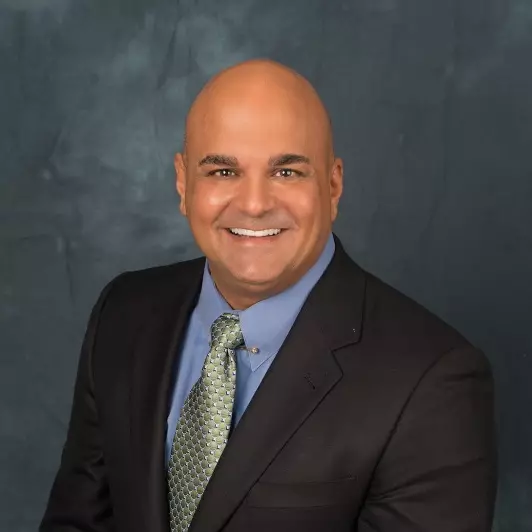
Vincent Arcuri
Realtor since 1991
Categories
Recent Posts