
How Emotions Can Cost You a Fortune When Selling Your Home
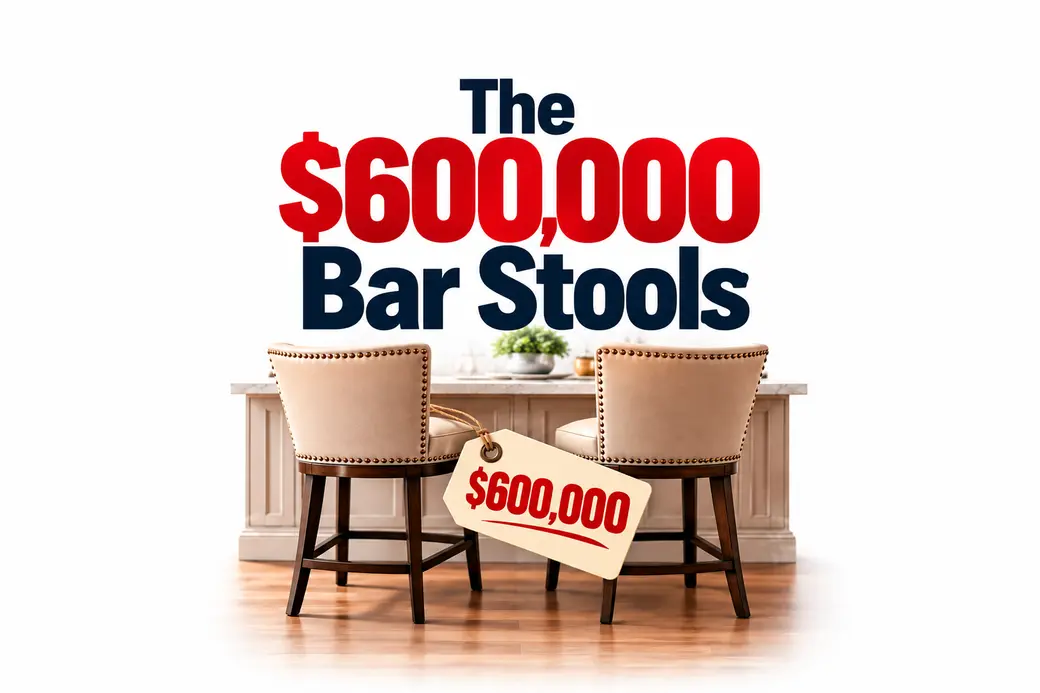
The $600,000 Bar Stools: How Emotions Can Cost You a Fortune When Selling Your Home
Sometimes the smallest disagreement in a real estate transaction can turn into the most expensive mistake you'll ever make.
After selling real estate in Tampa Bay since 1991 and helping with over 3,200 home sales, I've learned something every homeowner needs to understand. The biggest threat to a successful real estate transaction isn't always the price, the inspection, or the financing. Sometimes it's the seller's emotions.
I'm dealing with a situation right now that reminds me of a transaction from 2006. It's a story I've told countless times over the years, and I call it The $600,000 Bar Stools.
A $2.6 Million Sale Almost in the Bag
Back in 2006, I was negotiating the sale of a beautiful luxury home for approximately $2.6 million. The real estate market was already showing serious signs of weakness, and buyers were gaining negotiating power. We had a buyer interested in purchasing the home. The price was coming together, the buyer loved the property, and we were getting close to putting the transaction under contract.
But there was one problem. The bar stools.
The home had beautiful bar stools that matched the kitchen perfectly. The buyer loved them and wanted them included in the purchase. My seller wanted to keep them. Every time we went back and forth with the negotiations, my seller would scratch the bar stools off the agreement. And every time, the buyer would insist that they be included. This continued for days.
Think about that. We were negotiating a $2.6 million real estate transaction, and the sticking point was a set of bar stools.
Then Something Happened That Changed Everything
While the two sides were arguing over furniture, another home came on the market. Because our buyer hadn't signed a contract, they were free to continue looking. And that's exactly what they did.
They went to see the newly listed home, discovered it offered better value, and decided to purchase that property instead. Just like that, our $2.6 million opportunity disappeared.
The other seller was willing to work with the buyer. My seller had been unwilling to budge over a relatively small item. And sometimes that's all it takes to lose a buyer.
Eight Months Later, Those Bar Stools Cost $600,000
Remember, this was 2006. The real estate market was deteriorating rapidly as the housing downturn was beginning to unfold. After losing that buyer, my seller waited eight long months before receiving another acceptable offer. By then, the market had declined significantly.
The home that we had been negotiating at approximately $2.6 million ultimately sold for $2 million. That's a $600,000 difference.
Were the bar stools themselves worth $600,000? Of course not. And nobody can say with certainty that including them would have guaranteed the original sale. But the disagreement delayed negotiations, the buyer found another property, and the seller lost an opportunity that never returned.
That's why, more than 20 years later, I still refer to them as The $600,000 Bar Stools.
Buyers Sometimes Need a Small Victory
Here's something many sellers don't understand about negotiating real estate. Sometimes buyers aren't asking for a particular item because of its monetary value. They're asking because they want to feel like they received something extra in the negotiation.
Maybe it's the refrigerator, a chandelier, patio furniture, a couch, or those famous bar stools. It's human nature. People want to feel good about their purchase, especially when they're spending hundreds of thousands or millions of dollars.
In this particular transaction, my seller had already been unwilling to make many concessions, even though the market was favoring buyers. The bar stools became the final sticking point. And when another seller offered a better overall opportunity, the buyer moved on.
Sometimes giving a buyer a small victory is what allows you to walk away with the much bigger victory.
Your Emotional Attachment Doesn't Determine Market Value
I understand that homeowners develop emotional attachments to their possessions. Maybe a chandelier has been in the family for generations. Maybe a piece of furniture has sentimental value that can't be replaced. There's absolutely nothing wrong with that.
But when you're selling your home, you have to separate your emotional attachment from the financial decision you're making. Ask yourself a simple question: Is keeping this item worth potentially losing the entire transaction?
If you're selling a $700,000 home and the buyer wants a $1,500 light fixture, are you really prepared to gamble the sale over that fixture? What happens if the buyer walks away and your next offer comes in $25,000 lower? What happens if your home sits on the market another three months while you're making mortgage payments, paying insurance, property taxes, and maintaining the property?
Suddenly, that $1,500 light fixture becomes a very expensive decision.
The Market Doesn't Care About Your Feelings
One of the most important lessons I've learned throughout my real estate career is that the market doesn't care what you paid for your home, what you think it's worth, or how emotionally attached you are to something inside it. The market responds to supply, demand, competition, interest rates, and what buyers are willing to pay.
In a strong seller's market, you may have the leverage to hold firm on certain things. But in a buyer's market, where buyers have more choices and negotiating power, flexibility becomes incredibly valuable.
The seller who understands the market they're actually in, rather than the market they wish they were in, usually makes better decisions.
And that's where having an experienced Realtor matters. My job isn't simply to put a sign in your yard and negotiate the highest possible price. It's also to help you recognize when you're about to make an emotional decision that could cost you thousands of dollars. Sometimes that means having a difficult conversation with a seller and telling them something they may not want to hear.
Don't Win the Battle and Lose the War
I've seen transactions nearly fall apart over refrigerators, televisions, curtains, furniture, light fixtures, and repairs that cost a fraction of the overall purchase price. And sometimes the seller wins the argument. They get to keep the chandelier. They get to keep the furniture. They get to keep those bar stools. But they lose the buyer.
What good is winning a $2,000 argument if it costs you a $50,000 reduction in your eventual sales price?
The goal isn't to win every little negotiation. The goal is to sell your home for the best possible price, with the best possible terms, in the market you're facing. That requires perspective, strategy, and sometimes a little flexibility.
My Advice After More Than 3,200 Home Sales
Before you allow a relatively minor disagreement to jeopardize your real estate transaction, consider the bigger picture. Look at how many competing homes are on the market. Consider how long your property has been listed. Understand whether prices are rising, holding steady, or declining. And most importantly, consider the financial consequences if your current buyer walks away.
If an item has tremendous sentimental value, discuss that with your Realtor before negotiations begin. You may be able to exclude it from the sale upfront, remove it before marketing the home, or find a reasonable compromise. But don't let an emotional attachment blind you to a much larger financial opportunity.
Because sometimes the most expensive thing in your home isn't the house itself. It's the one thing you refuse to let go of.
And if you don't believe me, just ask about those $600,000 bar stools.
Vincent Arcuri
Florida Realtor Since 1991 | Over 3,200 Homes Sold
Categories
Recent Posts